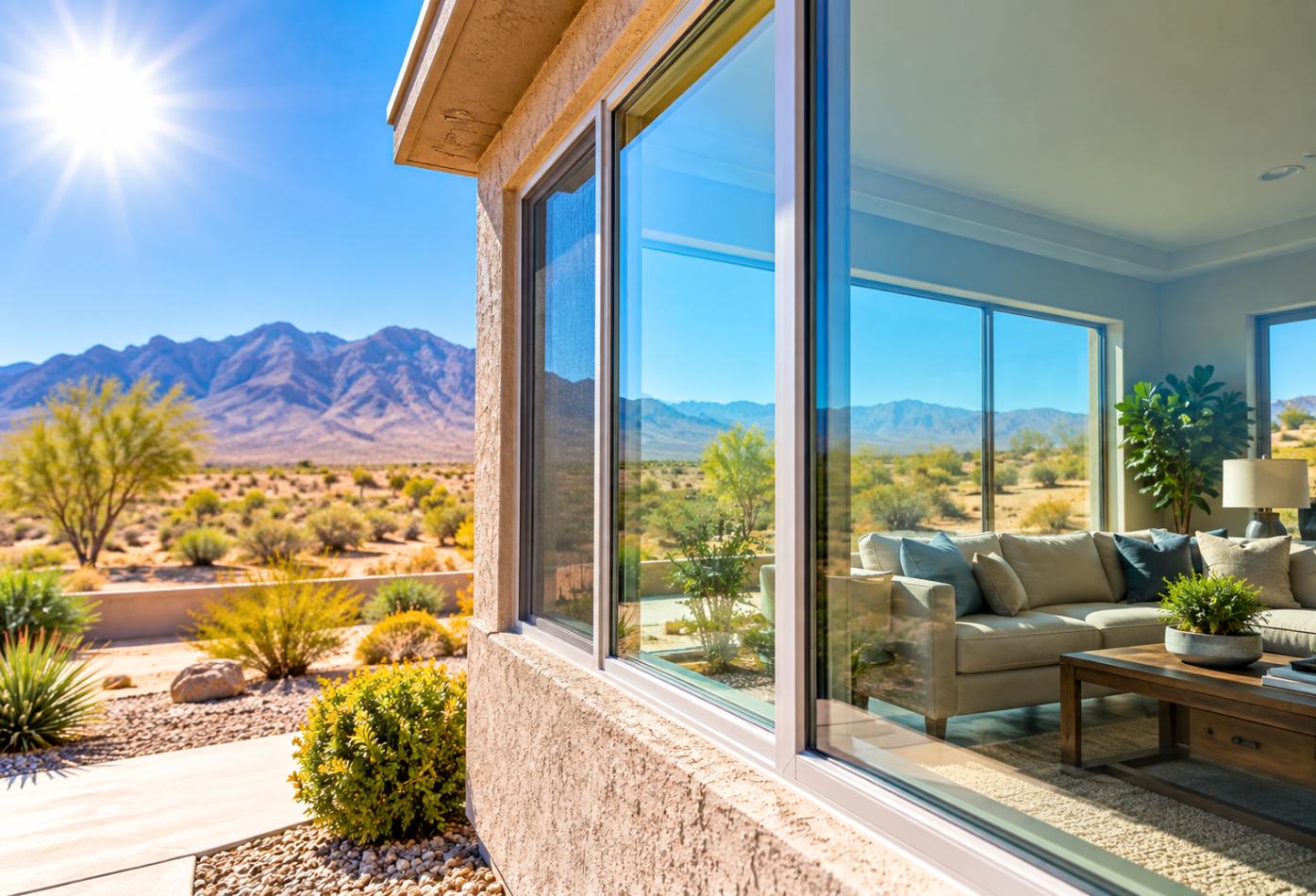
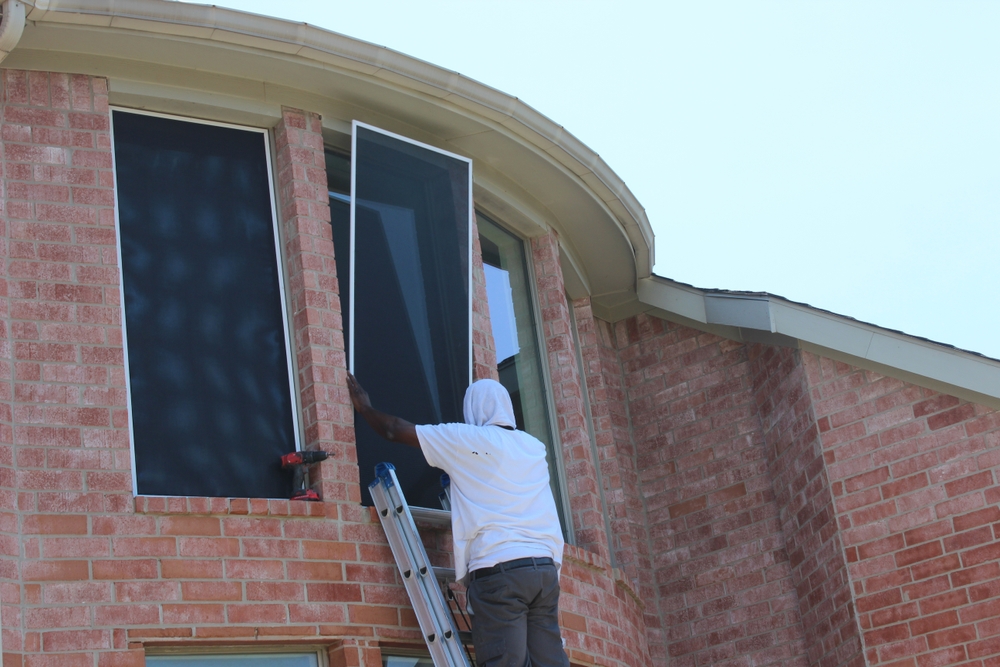
Summer sun in Pahrump can turn a bright living room into one of the hottest rooms in the house. Large west-facing windows, sliding glass doors, and other exposed glass can allow solar heat into the home just when the cooling system is already working hardest.
Quick answer: The right Low-E glass can help keep a Pahrump home cooler by reducing the amount of solar heat that passes through the glass while still allowing useful daylight inside. For Southern Nevada homes, choosing glass with an appropriate solar heat gain coefficient is especially important. Low-E glass cannot eliminate the need for air conditioning, but properly selected glazing can improve comfort and reduce unwanted heat gain through windows and doors.
What local homeowners should know
Low-E coatings are designed to manage radiant heat while maintaining visibility through the glass.
In the Pahrump Valley, lower solar heat gain can be especially useful on windows receiving intense afternoon sun.
Solar heat gain coefficient, or SHGC, tells you how much solar heat a window allows through, with lower numbers indicating less solar heat transmission.
Window orientation matters because west-facing glass can receive strong afternoon exposure when outdoor temperatures are already high.
Low-E glass works best as part of a complete window system that also addresses insulation, air leakage, frames, and proper installation.
Why Does Low-E Glass Matter in Pahrump?
Low-E glass matters in Pahrump because windows can become a significant path for unwanted solar heat during the long cooling season, and selecting glazing designed for a warm climate can reduce how much of that heat reaches the home’s interior.
The U.S. Department of Energy recommends low solar heat gain coefficients for warm climates because they reduce unwanted heat entering through windows. It also notes that Low-E coatings, particularly spectrally selective coatings, can reduce summer heat gain without significantly affecting visible light.
That guidance is particularly relevant in the open desert environment of the Pahrump Valley. Homes around Nye County may have relatively little natural shade, and properties with broad views toward the Spring Mountains can also have substantial areas of exposed glass.
Pahrump Valley Glass helps local property owners evaluate glass and window needs for these desert conditions. From here, we focus on matching the glass to the opening, exposure, and goals of the property rather than assuming every window needs exactly the same solution.
What Does Local Energy Guidance Tell Homeowners?
Local and federal energy guidance shows that window performance should be matched to climate, with solar heat gain becoming especially important where cooling is a major concern.
The U.S. Department of Energy identifies SHGC and U-factor as two primary measures homeowners should consider. SHGC describes how much solar heat passes through a window, while U-factor measures heat transfer through the complete window system. Lower values generally mean less solar heat transmission and lower heat transfer, respectively.
Valley Electric Association serves the local area from its Highway 372 location, making electricity use a familiar household concern for area residents. Reducing unnecessary heat gain through exposed glass can help address one part of a home’s overall cooling load, although actual energy results vary by the home, glass area, orientation, HVAC system, insulation, and occupant habits.
How Can the Right Low-E Glass Affect Indoor Comfort?
The right Low-E glass can improve indoor comfort by limiting radiant solar heat entering through windows, particularly in rooms that become noticeably warmer when direct sunlight reaches the glass.
Think about a west-facing family room near State Route 160 on a summer afternoon. Even when the air conditioner maintains the thermostat setting, someone sitting beside an untreated or poorly performing window may still feel uncomfortable because of radiant heat.
Reducing solar heat transmission can help make temperatures near the glass feel more manageable. It can also help address rooms that consistently become hotter than the rest of the house during sunny periods.
Low-E glass is not a cure for every hot room. Attic insulation, ductwork, air leaks, shading, HVAC performance, and building orientation can all affect comfort.
What Are the Signs Your Current Glass May Be Contributing to Heat Gain?
Glass may be contributing to indoor heat problems when sunny rooms become noticeably hotter, uncomfortable areas develop near windows, or cooling demands appear to increase during periods of direct solar exposure.
Watch for these common signs:
Rooms with west-facing windows become significantly less comfortable in the afternoon.
Furniture or flooring near windows feels unusually warm in direct sunlight.
You avoid sitting near certain windows during summer afternoons.
Blinds or curtains need to remain closed throughout the day simply to control heat.
Large glass doors create noticeable hot zones near the opening.
Older windows appear to perform differently from newer windows elsewhere in the home.
Your cooling system maintains temperature, but rooms with extensive glass still feel uncomfortable.
These symptoms do not automatically mean the glass needs replacement. A professional evaluation can help separate glazing issues from air leakage, frame problems, failed insulated units, or other building-envelope concerns.
When Should You Call a Glass Professional?
You should call a glass professional when heat problems are concentrated around particular windows or doors, the existing glass is damaged or failing, or you want to determine which glazing specifications make sense before replacing glass or windows.
Homeowners can safely observe which rooms receive direct sun and when those rooms become uncomfortable. You can also note window orientation and compare sunny rooms with shaded rooms.
Professional help becomes useful when you need to identify existing glass, evaluate replacement options, measure an opening, or determine whether the glass alone or the complete window assembly needs attention.
What Common Local Conditions Increase Window Heat Gain?
The most common local contributors to window heat gain are strong solar exposure, limited exterior shade, large areas of glass, and window orientations that receive direct afternoon sun.
In the Pahrump Valley, these conditions can occur together. A single-story desert home on an open lot may receive considerably more direct exposure than a home shaded by mature landscaping or neighboring structures.
West-facing windows are often worth examining first because afternoon sunlight arrives during an already hot portion of the day. South-facing glazing can also receive substantial solar exposure depending on the season, roof overhangs, landscaping, and window placement.
Large patio doors and picture windows deserve attention as well because their greater glass area can make solar performance more noticeable.
How Can Homeowners Reduce Solar Heat Gain?
Homeowners can reduce solar heat gain by combining suitable Low-E glass with exterior shade, effective window coverings, good seals, and sensible maintenance of the complete window assembly.
Start by identifying the windows that receive the most direct sun. Exterior overhangs and shading can help where appropriate, while interior blinds and shades provide another layer of control. The Department of Energy also identifies exterior shading and interior window coverings as methods for reducing unwanted solar heat.
Check weatherstripping and seals periodically, especially after dusty or windy desert conditions. If you see cracked glass, condensation trapped between panes, damaged frames, or failed seals, move beyond DIY inspection and have the assembly evaluated.
What Results Can You Expect From Low-E Glass?
Properly selected Low-E glass can reduce unwanted solar heat transmission and improve comfort near exposed windows, but the exact improvement depends on the existing glass, orientation, window size, shading, and overall efficiency of the home.
A homeowner replacing older clear glass may notice that direct sun feels less intense through the upgraded glazing. Rooms with substantial exposed glass may also become easier to keep comfortable.
Energy savings should not be promised as a fixed percentage. Windows are only one part of the home’s thermal envelope, and insulation, HVAC efficiency, air sealing, thermostat settings, and household behavior all affect electricity use.
What Mistakes Should Pahrump Homeowners Avoid?
The biggest mistakes are choosing glass based only on appearance, assuming all Low-E coatings perform the same way, and ignoring the orientation and condition of the complete window.
Mistake: Choosing only by tint or darkness. Consequence: Darker-looking glass does not automatically provide the right overall performance. Better approach: Compare relevant performance ratings, including SHGC.
Mistake: Treating every side of the house identically. Consequence: A shaded opening and a west-facing picture window may have very different solar exposure. Better approach: Consider orientation, window size, and existing shade.
Mistake: Assuming new glass fixes every hot room. Consequence: The actual problem may include air leakage, insulation, ductwork, or HVAC performance. Better approach: Evaluate the symptoms before deciding on a solution.
What Is a Common Local Low-E Glass Scenario?
A common local scenario is a Pahrump home with a large west-facing living-room window that becomes uncomfortable every summer afternoon even while the rest of the house remains reasonably cool.
The homeowner may initially rely on closed blinds throughout the afternoon. When evaluating a longer-term solution, the important questions include the condition of the existing window, the amount of direct solar exposure, the size of the opening, and the performance characteristics of possible replacement glass.
This is a representative scenario, not a specific customer case study. The appropriate solution depends on an inspection of the actual opening.
Which Glass Services Can Help?
Glass replacement and window-related services can help when existing glazing is damaged, poorly suited to the home’s solar exposure, or ready for an efficiency-focused upgrade.
We can help homeowners evaluate glass options for windows and other residential openings while considering the realities of desert heat and sun exposure. The goal is to select a practical solution for the specific property rather than recommending an upgrade the home does not need.
Low-E options should be compared by actual performance characteristics rather than by the Low-E label alone, with SHGC, U-factor, visible light, orientation, and the complete window assembly all contributing to the decision.
Standard clear glass may provide daylight and visibility but offers less control over solar heat than glazing designed specifically to manage heat transfer. Low-E coatings add a microscopically thin layer designed to influence radiant heat transmission.
For a warm desert environment, lower solar heat gain is generally desirable. The Department of Energy specifically recommends low-SHGC products for warm climates and explains that lower SHGC values indicate less solar heat transmission.
The best choice still depends on the opening. Extremely low solar gain is not automatically the right answer for every window, especially when daylight, appearance, orientation, and other design goals matter.
Where Do We Help Local Property Owners?
We help property owners in Pahrump and the surrounding Pahrump Valley evaluate residential glass needs with local desert conditions in mind.
Properties across Nye County, including homes toward the edges of town and routes leading toward communities such as Amargosa Valley, can experience significant sun exposure. Local conditions should remain part of the conversation whenever glass is being selected for comfort or efficiency.
What Can Happen If You Ignore Excessive Window Heat Gain?
Ignoring excessive window heat gain can leave rooms uncomfortable and place unnecessary cooling demands on the home, particularly when large exposed windows repeatedly admit afternoon solar heat.
The issue does not always require immediate glass replacement. However, repeatedly closing off a room or running the cooling system harder without identifying the source can leave the underlying comfort problem unresolved.
A glass evaluation can help determine whether an upgrade makes sense or whether another part of the home should be investigated first.
Is Low-E glass worth considering for a Pahrump home?
Yes. Low-E glass is particularly relevant in a hot, sunny environment because suitable coatings can reduce unwanted solar heat entering through windows. The benefit will vary with orientation, window area, shading, existing glazing, and the rest of the home’s building envelope.
What SHGC is best for windows in Pahrump?
A lower SHGC is generally preferred in warm climates because it indicates less solar heat transmission. The U.S. Department of Energy recommends low solar heat gain products for warm climates. The appropriate specification for an individual home should consider the complete window, orientation, daylight preferences, and applicable requirements.
Does Low-E glass make a Pahrump house darker?
Not necessarily. Low-E coatings can reduce solar heat while still allowing substantial visible light through the window. Visible transmittance is a separate performance measurement from SHGC, so homeowners can compare both when balancing daylight with solar heat control.
Should west-facing windows use Low-E glass?
West-facing windows are strong candidates for solar-control glazing because they can receive direct afternoon sunlight during a hot part of the day. In the Pahrump Valley, homeowners experiencing afternoon hot spots near western windows should consider orientation when comparing replacement glass.
Can Low-E glass lower my electric bill?
It can help reduce unwanted heat gain through windows, which may reduce part of the home’s cooling load, but a specific bill reduction cannot be guaranteed. Valley Electric Association bills local electricity use, while actual household consumption also depends on HVAC efficiency, insulation, air sealing, thermostat settings, home size, and occupant behavior.
Does Low-E glass block all Nevada heat?
No. Low-E glass reduces particular forms of heat transfer, but it does not stop all heat from entering a building. Walls, roofs, doors, air leaks, and other windows also affect indoor temperatures. Effective desert-home comfort usually requires several parts of the building envelope to work together.
Can I add Low-E glass without replacing every window?
Possibly. Whether individual glass units can be addressed depends on the construction and condition of the existing windows. A professional should inspect the opening and determine what replacement options are practical before assuming the entire house needs new windows.
How do I know whether my glass or HVAC system is causing a hot room?
Start by noticing whether discomfort is strongest near windows and closely follows direct sunlight. If the entire home struggles to maintain temperature, HVAC or insulation issues may also be involved. A room that becomes hot primarily during direct solar exposure provides a reason to evaluate its windows and shading.
Make Your Home More Comfortable in the Desert Heat
Living in Pahrump means designing and maintaining a home for intense sunshine, not simply reacting when a room becomes uncomfortable. Choosing the right Low-E glass can help control unwanted solar heat while preserving the daylight and views that make windows valuable in the first place.
We can help you evaluate your existing glass and determine which options fit your home’s exposure and comfort goals.
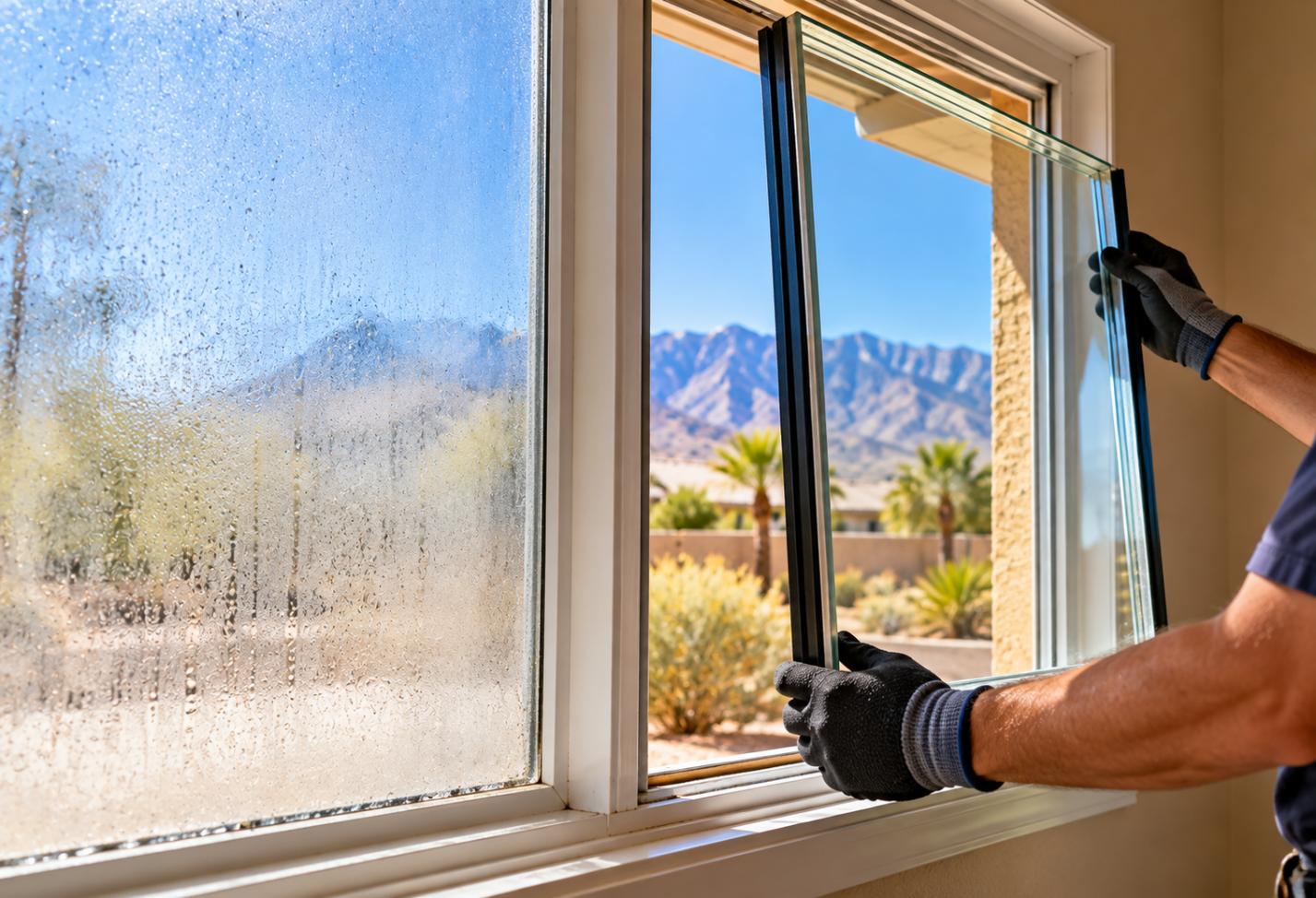
A cloudy window in Pahrump can look like it simply needs a good cleaning, especially after wind and desert dust have coated the glass. But when the haze or moisture appears trapped between two panes, cleaning the inside and outside surfaces will not solve the problem.
In many cases, the window frame itself may still be usable. The part that needs attention could be the insulated glass unit, commonly called an IGU.
Quick answer: If a double-pane window is foggy, hazy, or showing moisture between the panes, the insulated glass unit may have lost its seal. When the frame and surrounding window components remain in serviceable condition, replacing the IGU can restore the glass without replacing the entire window assembly. A professional inspection can determine whether glass-only replacement or complete window replacement makes more sense.
What local property owners should know
Fog or moisture that cannot be wiped away from either side of the window can indicate a failed seal between the panes.
Pahrump’s intense sun, temperature swings, wind, and dusty desert conditions can be tough on exterior building materials over time.
An IGU is the sealed glass assembly inside many double-pane windows, so replacing it is different from replacing the complete frame.
Homes throughout the Pahrump Valley can have windows of different ages, styles, and configurations, which means the right repair depends on the condition of the individual window.
A damaged frame, operating problem, or water intrusion around the opening may point toward a larger repair instead of an IGU-only replacement.
Why Does Foggy Glass Matter in Pahrump?
Foggy glass matters in Pahrump because moisture or haze trapped between panes can indicate that an insulated glass unit is no longer sealed as intended, while desert heat and strong sunlight can make clear, properly functioning windows particularly valuable for local homes and businesses.
The Pahrump Valley experiences the kind of dry, sunny conditions that make windows an important part of indoor comfort. Properties near State Route 160, Calvada-area neighborhoods, Mountain Falls, and other parts of the valley also deal with blowing dust that can make diagnosing cloudy glass confusing.
Start by cleaning both accessible surfaces. If the cloudy appearance remains and seems to sit inside the window, the problem may be within the sealed glass assembly.
Pahrump Valley Glass helps local property owners evaluate glass problems and determine the appropriate service. Once we have inspected the window, we can explain whether an IGU replacement is a practical option or whether another repair should be considered.
What Is an IGU?
An insulated glass unit is a sealed assembly made from two or more panes of glass separated by a spacer, creating an enclosed space between the panes. It is the glass portion found in many modern residential and commercial window systems, rather than the entire frame, sash, trim, and surrounding opening.
That distinction matters.
If the insulated glass fails but the rest of the window remains suitable for continued use, replacing everything may be unnecessary. An IGU replacement focuses on the glass assembly itself.
For property owners in Nye County, this can be especially useful when the primary complaint is cloudy or compromised glass rather than a damaged window frame.
What Do We Commonly See With Desert Windows?
A common local window issue is glass that looks dirty even after cleaning because the discoloration is actually between the panes. Rather than presenting unsupported statistics, it is more useful to look at the conditions Pahrump properties routinely face and the symptoms owners can observe themselves.
Strong sunshine, high summer temperatures, airborne dust, and day-to-night temperature changes all expose windows to demanding conditions. Over time, window components can age, seals can deteriorate, and glass can become damaged.
Not every cloudy window has the same cause, however. That is why identifying where the haze is located is more useful than assuming the entire window has failed.
How Can a Failed IGU Affect a Local Home or Business?
A failed IGU can reduce visibility, affect the appearance of the property, and indicate that the sealed glass assembly is no longer performing as designed. For Pahrump homeowners, that can mean living with permanent-looking haze even after the window has been thoroughly cleaned.
For businesses along busy local corridors, cloudy storefront or office glass can also affect appearance and visibility.
The practical question is not simply, “Do I need a new window?” It is, “Which part of this window actually needs to be replaced?”
That distinction can prevent property owners from jumping to a larger project before the existing frame has been evaluated.
What Are the Warning Signs of an IGU Problem?
The strongest warning sign of an IGU problem is fog, haze, condensation, or staining that appears trapped between panes and cannot be reached from either side. Other symptoms can help determine whether you have a glass issue or a broader window problem.
Watch for:
Persistent fogging between two panes of glass.
A cloudy film that remains after cleaning both accessible surfaces.
Condensation that appears inside the sealed glass space.
Mineral-like deposits or streaking between panes.
A noticeable difference between one cloudy window and otherwise clear windows nearby.
Cracked or visibly damaged insulated glass.
Changes in the appearance of the spacer or perimeter area inside the glass assembly.
Frame damage, difficult operation, or water intrusion in addition to cloudy glass, which may indicate that the issue extends beyond the IGU.
When Should You Call a Glass Professional?
Call a glass professional when haze or condensation appears to be trapped between panes, the glass is cracked, or you cannot determine whether the problem involves only the IGU or the complete window. Surface dust is something homeowners can safely clean, but a sealed glass assembly is not a typical DIY cleaning problem.
Try cleaning the interior and exterior glass first. Look at the window from several angles and at different times of day, since bright Nevada sunlight can make haze easier to see.
If the discoloration clearly remains between the panes, professional evaluation is the next practical step.
What Commonly Causes Cloudy Double-Pane Windows?
Cloudy double-pane windows are commonly associated with deterioration or failure of the seal around the insulated glass assembly, allowing conditions inside the sealed space to change. Age and environmental exposure can contribute, but the condition of the entire window should be considered before deciding on a repair.
In the Pahrump area, several factors deserve attention:
Long-term sun and heat exposure: Intense desert sunlight can place exterior building components under sustained environmental stress.
Temperature changes: Glass and surrounding materials experience repeated heating and cooling.
Age: Seals and other window components do not remain new indefinitely.
Physical damage: Cracks, impact damage, or problems around the glass can require service.
Broader window deterioration: Sometimes foggy glass appears alongside frame or operating problems, making an IGU-only approach less appropriate.
Can You Prevent IGU Seal Problems?
You cannot prevent every insulated glass failure, but routine inspection can help Pahrump property owners spot developing window problems before they become easy to ignore. The best maintenance focuses on keeping windows clean, identifying damage, and avoiding DIY work that could harm the glass or surrounding components.
Periodically clean the accessible glass and inspect the perimeter of each window. After periods of heavy wind or dusty weather in the Pahrump Valley, cleaning the surface also makes it easier to distinguish ordinary dirt from internal haze.
Look for cracked glass, damaged components, or changes around the frame. Avoid attempting to separate, drill, or dismantle a sealed IGU yourself.
What Results Can You Expect From an IGU Replacement?
An appropriate IGU replacement gives you a new sealed glass assembly while allowing suitable existing window components to remain in place. The exact result depends on the window design, dimensions, frame condition, glass requirements, and whether there are other problems with the opening.
This is why an inspection comes before assuming that glass replacement is the answer.
If the frame is sound and the primary problem is the insulated glass, replacing the IGU can directly address the failed component. If the frame is deteriorated, damaged, or no longer functioning properly, broader window work may make more sense.
What Mistakes Should Pahrump Homeowners Avoid?
The biggest mistake is assuming that every foggy window requires complete replacement, because the problem may be limited to the insulated glass unit. A few simple diagnostic mistakes can also lead property owners in Nye County toward the wrong solution.
Mistake: Repeatedly cleaning glass that is cloudy between the panes. Consequence: No amount of surface cleaning can reach contamination trapped inside a sealed unit. Better approach: Determine whether the haze is on the surface or between the panes.
Mistake: Assuming the entire window has failed. Consequence: You may consider a larger replacement project before knowing whether the frame can remain. Better approach: Have the glass and window components evaluated separately.
Mistake: Ignoring cracks or frame problems. Consequence: An IGU replacement may not address issues elsewhere in the window. Better approach: Evaluate the complete condition of the opening before choosing a repair.
What Does a Common Local Scenario Look Like?
A common Pahrump scenario is a homeowner who cleans a dusty window but discovers that one section remains cloudy because the haze is actually inside the insulated glass. This is an illustrative local scenario, not a specific customer case study.
Imagine a double-pane window on a sun-exposed side of a home. The exterior accumulates normal desert dust, so the homeowner cleans both sides. Most of the glass becomes clear, but a cloudy patch remains.
At that point, the question shifts from cleaning to diagnosis. If the frame is still suitable and the issue is isolated to the sealed glass assembly, an IGU replacement may be one option worth evaluating.
What Glass Services Can Solve the Problem?
The right glass service depends on whether the problem is confined to the insulated glass unit or involves other parts of the window. We can evaluate the glass and help determine which component is responsible for the visible problem.
For fogged insulated glass, an IGU replacement may address the failed glass assembly without requiring a complete new window. Cracked or damaged glass may require a different replacement specification, while problems involving the frame or operation should be evaluated separately.
IGU Replacement vs. Whole Window Replacement: Which Makes Sense?
IGU replacement generally makes more sense when the insulated glass is the primary problem and the existing window components remain suitable, while whole-window replacement may be appropriate when significant problems extend beyond the glass.
Situation
IGU Replacement May Fit
Whole-Window Evaluation May Fit
Fog trapped between panes
Yes
Sometimes
Glass is the primary problem
Yes
Not necessarily
Frame is significantly damaged
Usually not by itself
Yes
Window does not operate properly
Requires further evaluation
May be appropriate
Problems extend beyond the glass
May not solve everything
Further evaluation needed
Surface is simply dusty
No replacement needed
No replacement needed
The goal is not to choose the biggest project. It is to identify the actual failed component and select an appropriate solution.
Where Do We Provide Local Glass Service?
We serve customers in Pahrump and the surrounding Pahrump Valley, helping local property owners address foggy, damaged, and compromised glass. Properties throughout Nye County can experience different window issues depending on age, exposure, construction, and location.
Whether your property is closer to central Pahrump, Mountain Falls, Calvada-area neighborhoods, or another nearby part of the valley, the condition of the individual window should guide the repair decision.
What Can Happen If You Ignore Foggy Insulated Glass?
Ignoring foggy insulated glass can leave you with worsening visibility, an unattractive cloudy appearance, and a sealed glass unit that is no longer in its intended condition. Waiting can also make it easy to overlook separate problems if cracking, frame damage, or water intrusion develops.
There is no reason to assume every cloudy window is an emergency. There is also little benefit in repeatedly cleaning a window when the haze is inaccessible between the panes.
Getting the problem identified gives you clearer options.
Frequently Asked Questions About Foggy Windows and IGUs
Can a foggy double-pane window be repaired without replacing the whole window in Pahrump?
Yes, a foggy double-pane window may be addressed without replacing the entire window if the problem is limited to the insulated glass unit and the existing window components remain suitable. An inspection can determine whether IGU replacement is appropriate or whether damage elsewhere makes a more extensive repair worth considering.
How can I tell whether my Pahrump window is dirty or fogged between the panes?
Clean both accessible glass surfaces first and check whether the cloudy area remains in the same location. Desert dust is common around Pahrump, so surface dirt can easily mimic haze. If the mark cannot be wiped away and appears enclosed between panes, the insulated glass unit may need professional evaluation.
Why do double-pane windows get cloudy in the Pahrump Valley?
Double-pane windows can become cloudy when the sealed environment between the panes is compromised and moisture or deposits become visible inside the unit. Window age and long-term exposure to Pahrump Valley sun and temperature changes may also be relevant, although the exact cause should be determined from the condition of the window.
Does condensation between panes mean the IGU seal has failed?
Condensation trapped between the panes is a common indication that the sealed insulated glass assembly has been compromised. Condensation on the room-side or exterior surface is different because it is accessible. Determining exactly where the moisture sits is therefore one of the first useful diagnostic steps.
Is IGU replacement the same as replacing a window?
No, replacing an IGU means replacing the sealed glass assembly rather than automatically removing and replacing the entire window system. Depending on the window, the existing frame and other suitable components can remain. That distinction is why diagnosing the glass separately from the frame can be useful for Nye County property owners.
Can Pahrump’s desert dust cause permanent fogging between window panes?
Surface desert dust does not by itself explain haze sealed between panes because exterior dirt remains accessible for cleaning. Pahrump’s dusty conditions can make diagnosis confusing, however. Clean the accessible surfaces first. If the haze remains inside the glass assembly, the issue is more likely related to the IGU than ordinary dust.
Should I replace an IGU if the window frame is damaged too?
An IGU replacement alone may not address the full problem when the window frame is significantly damaged or the window no longer operates correctly. In that situation, the glass and surrounding components should be evaluated together so you do not replace one part while leaving another important problem unresolved.
Do I need to replace every window if only one is foggy?
No, one foggy window does not automatically mean every window in the home needs replacement. Windows can age and fail differently based on their condition, orientation, exposure, and construction. If only one insulated glass unit shows symptoms, that specific window can be evaluated before making decisions about the rest of the property.
Get Clear Answers About Your Foggy Windows
Cloudy glass does not automatically mean your Pahrump property needs a complete new window. If the problem is isolated to the insulated glass unit, a targeted IGU replacement may be the more appropriate solution.
At Pahrump Valley Glass, we can help you identify what is actually happening with the glass so you can make an informed repair decision.
Restore Clear Glass Without Assuming You Need a Whole New Window
Get your window evaluated first, then choose the solution that fits the actual condition of the glass and window.
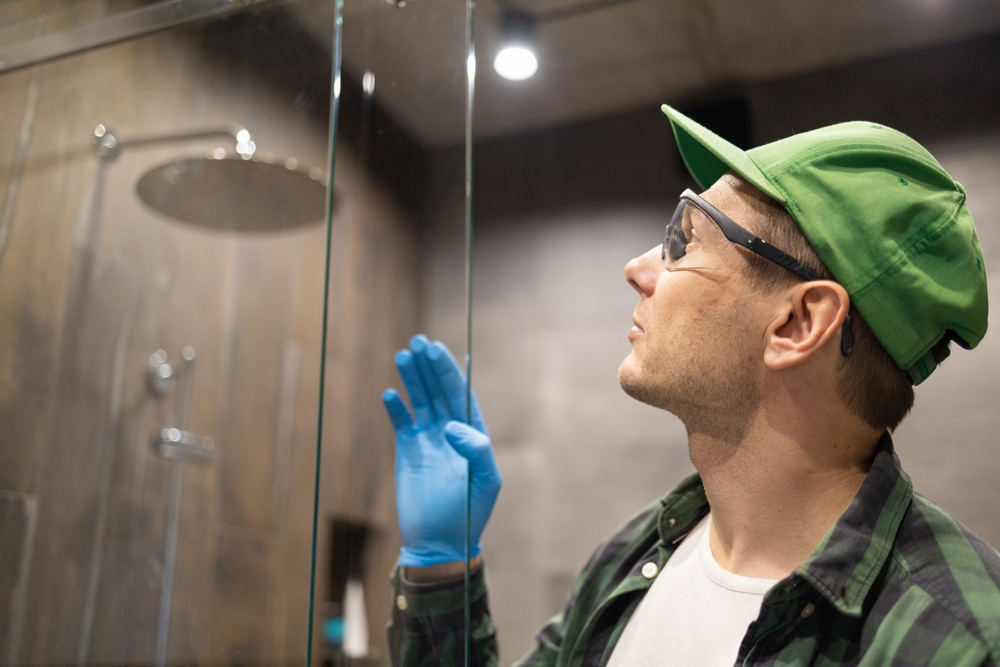
A bathroom remodel can make a Pahrump home feel cleaner, brighter, and more comfortable, but the shower enclosure has an outsized effect on the finished look. Choosing between frameless and framed shower doors affects more than style. It also influences cleaning, hardware, glass selection, installation requirements, and your remodeling budget.
Quick answer:Frameless shower doors are often the better fit for homeowners who want an open, modern appearance that puts tile and stonework on display. Framed shower doors use metal framing around the enclosure, making them a practical option when budget, configuration, or the existing shower opening favors a more traditional system. The right choice depends on your bathroom layout, design goals, glass requirements, and the condition of the shower opening.
What local readers should know
Frameless shower doors minimize visible metal and can help a smaller bathroom feel more open.
Framed shower doors remain a practical choice for many Pahrump bathroom remodels and can work with a variety of shower configurations.
Mineral deposits and water spotting can affect shower glass, so regular cleaning matters regardless of the enclosure style.
Older homes in Nye County may have shower openings that need careful measurement before a new enclosure is selected.
The best enclosure is one designed around the actual opening rather than chosen solely from a showroom photo.
Why Does the Shower Door Style Matter in a Pahrump Bathroom Remodel?
The shower door style matters because it influences the appearance, maintenance needs, installation, and everyday function of your remodeled bathroom. In Pahrump, where homeowners may be updating everything from established houses to newer desert properties, the enclosure needs to complement both the bathroom design and the actual shower opening.
A frameless enclosure can showcase decorative tile, stone, and updated fixtures without heavy framing interrupting the view. A framed enclosure creates more defined visual borders and may suit homeowners who prefer a traditional appearance or are working within particular project requirements.
Pahrump Valley Glass helps local homeowners evaluate glass and enclosure options for bathroom projects. We look at the shower opening, desired appearance, and practical needs of the space so homeowners can make an informed choice rather than selecting a door based on appearance alone.
What Local Conditions Should Pahrump Homeowners Consider?
Pahrump homeowners should consider desert dust, water spotting, existing bathroom construction, and routine cleaning when selecting shower glass. These everyday conditions can influence how an enclosure looks over time and how much maintenance a homeowner is comfortable performing.
Pahrump sits in the Pahrump Valley in Nye County, surrounded by the Southern Nevada desert landscape. Dust is a familiar part of maintaining homes throughout the region. Inside a shower, however, water residue and mineral buildup are usually more relevant to the appearance of the glass.
Clear glass makes a bathroom feel open, but it also makes spots and residue easier to see. Homeowners who prioritize a crisp, transparent look should plan on routine glass cleaning and drying after use when practical.
What Is a Frameless Shower Door?
A frameless shower door uses glass and minimal hardware rather than a continuous metal frame around the entire enclosure. This creates the clean, open appearance that makes frameless glass popular in contemporary bathroom remodels throughout Pahrump and the surrounding valley.
Frameless glass is especially attractive when the shower itself is a design feature. If you are investing in new tile, decorative niches, updated fixtures, or stone surfaces, an enclosure with less metal allows those materials to remain visible.
It can also visually reduce barriers in a compact bathroom. The actual floor area does not change, but uninterrupted glass can make the room appear larger and less divided.
What Is a Framed Shower Door?
A framed shower door uses metal components around the glass to create a clearly defined and supported enclosure system. For Pahrump homeowners, framed designs can be a practical option when the remodeling budget, desired appearance, or shower configuration makes a traditional enclosure preferable.
Framed does not automatically mean dated. The final appearance depends heavily on the glass, metal finish, bathroom fixtures, tile, and overall design.
For homeowners who do not need the nearly uninterrupted appearance of frameless glass, a framed enclosure can provide an attractive, functional solution without making the shower the dominant visual feature of the room.
What Are the Main Differences Between Frameless and Framed Shower Doors?
The main differences are the amount of visible metal, overall appearance, glass and hardware requirements, cleaning considerations, and project cost. Comparing those factors in the context of your actual Pahrump bathroom is more useful than choosing one style simply because it is currently popular.
Feature
Frameless Shower Doors
Framed Shower Doors
Appearance
Open and minimal
Defined and traditional
Visible metal
Minimal
More prominent
Tile visibility
Excellent
More visually divided
Cleaning
Fewer frame areas, but clear glass still needs cleaning
Frame and tracks may require additional attention
Installation
Depends heavily on accurate measurements and suitable mounting locations
Depends on enclosure design and opening
Budget
Often the higher-investment option
Often more budget-conscious
Best fit
Modern remodels and feature showers
Practical remodels and traditional designs
Neither option is automatically right for every home. Measurements, wall conditions, shower layout, door movement, and hardware placement all matter.
What Warning Signs Mean Your Existing Shower Enclosure May Need Replacement?
An enclosure may be ready for replacement when its glass, frame, hardware, seals, or operation no longer performs as intended. Pahrump homeowners planning a broader bathroom update should inspect the existing enclosure before deciding whether keeping it makes sense.
Common warning signs include:
The shower door drags, sticks, or no longer opens smoothly.
Metal framing shows significant deterioration or persistent buildup.
Hardware has become loose or unstable.
Water regularly escapes around the enclosure.
Seals or sweeps are worn or damaged.
The enclosure no longer fits the design of a remodeled bathroom.
Glass is damaged or the enclosure otherwise raises a safety concern.
Damaged glass or unstable hardware should be evaluated rather than treated as a cosmetic remodeling issue.
When Should You Call a Shower Glass Professional?
Call a shower glass professional when you need accurate measurements, glass selection, hardware planning, or installation for a new enclosure. Shower glass is not an ideal trial-and-error DIY project, particularly when large glass panels, drilled tile, hinges, and precise clearances are involved.
Homeowners can safely compare styles, identify preferred hardware finishes, plan their cleaning routine, and decide how much visual privacy they want. Measuring and installing the final glass system requires more precision.
This can be especially important when remodeling an existing Pahrump or Nye County home where walls and openings may not be perfectly square.
What Common Factors Affect Shower Door Selection in Local Homes?
Bathroom size, shower configuration, wall conditions, tile design, budget, and cleaning preferences are the most common factors affecting shower door selection. Each one can change whether framed or frameless glass makes more sense for a local remodel.
A compact bathroom may benefit visually from frameless clear glass. A larger primary bathroom may use a frameless enclosure to highlight an upgraded walk-in shower. A straightforward remodel focused on practicality may be better suited to a framed system.
The surrounding construction matters too. Glass cannot compensate for every problem with an improperly prepared opening, so enclosure planning should be coordinated with the rest of the bathroom remodel.
How Can You Keep Shower Glass Looking Better in Pahrump?
Regularly removing water from the glass and cleaning residue before it becomes stubborn is the simplest way to maintain a shower enclosure in Pahrump. Consistent light maintenance is generally easier than waiting for visible mineral deposits, soap residue, and grime to accumulate.
Use cleaning products appropriate for the glass and enclosure hardware. A squeegee can help remove water after showers, while routine attention to corners, tracks, hinges, and seals helps prevent buildup.
Avoid using abrasive tools that could scratch surfaces. If you are unsure whether a product is appropriate for specialty glass or hardware, check the applicable care instructions first.
What Results Can You Expect From a New Shower Enclosure?
A properly selected new enclosure can give a remodeled bathroom a more finished appearance, improve shower access, and better complement the room’s updated materials. Frameless glass typically produces the biggest visual change when replacing an enclosure with substantial framing.
The result should still match realistic expectations. Glass will require cleaning, hardware will remain visible in certain locations, and every enclosure must work within the physical limitations of the shower.
For Pahrump homeowners, the goal should be a shower enclosure that looks intentional and functions well in the actual bathroom rather than simply copying a design seen elsewhere.
What Shower Door Mistakes Should Homeowners Avoid?
The biggest shower door mistakes involve choosing appearance before confirming measurements, layout, and practical requirements. A successful Pahrump bathroom remodel treats the enclosure as part of the overall shower design rather than a last-minute accessory.
Mistake: Selecting a door before the finished opening is ready. Consequence: Changes to tile or walls can affect dimensions. Better approach: Coordinate enclosure planning with the remodeling sequence.
Mistake: Choosing frameless glass solely because it looks modern. Consequence: The selected configuration may not be the best match for the space or budget. Better approach: Compare appearance, function, installation requirements, and maintenance.
Mistake: Ignoring door swing and bathroom clearance. Consequence: The enclosure may interfere with nearby fixtures or feel awkward to use. Better approach: Consider how people will enter, exit, and move through the bathroom.
What Is a Common Shower Door Scenario in Pahrump?
A common local scenario is a homeowner replacing an older bathroom enclosure while updating tile, fixtures, and finishes. This is not a specific customer case study, but it illustrates why shower glass decisions should be made as part of the overall remodel.
Imagine a home near central Pahrump where an older framed enclosure visually divides a relatively compact bathroom. During the remodel, the homeowner installs new shower tile and wants that work to become a focal point.
A frameless enclosure may provide the desired open appearance. Another homeowner with a simpler remodel might decide that a framed system better matches the project’s priorities. The right answer comes from the room, not from a universal design rule.
What Shower Glass Solutions Can Support Your Remodel?
Professional shower glass services can help homeowners select and install an enclosure that matches the dimensions, layout, and appearance of the remodeled bathroom. We can discuss framed and frameless options based on the individual project rather than assuming one solution fits every Pahrump home.
Choose frameless glass if an open, minimal appearance is a top priority, and consider framed glass when practicality, budget, or a more defined enclosure style better fits the project. Your bathroom dimensions and construction should ultimately guide the decision.
If you are still comparing options, prioritize these questions: How much visible metal do you want? Do you want to showcase the shower tile? What is your realistic budget? How much routine cleaning are you comfortable with? What type of enclosure works with the finished opening?
Those answers can narrow the choice quickly.
Where Do We Help Homeowners With Shower Door Projects?
We help homeowners in Pahrump and the surrounding Southern Nevada area evaluate glass solutions for their bathroom projects. Properties throughout the Pahrump Valley and Nye County can vary considerably in age, bathroom layout, and remodeling goals, making project-specific measurements and planning important.
What Can Happen If You Put Off Replacing a Problem Shower Door?
Waiting can allow operational problems, loose hardware, worn seals, or water-control issues to continue instead of addressing them during the remodel. If an existing enclosure is already difficult to use or visibly deteriorated, replacing it while other bathroom work is underway may be more practical than treating it as a separate future project.
A cosmetic preference can usually wait. Damaged glass, unstable components, or other potential safety concerns deserve prompt professional evaluation.
Are frameless shower doors a good choice for Pahrump homes?
Yes, frameless shower doors can be an excellent choice for Pahrump homes when homeowners want a clean, open bathroom design. They are particularly appealing when new tile or other shower finishes are intended to remain visible. The shower opening, wall construction, hardware requirements, and remodeling budget should still be evaluated before making the final choice.
Are framed shower doors outdated?
No, framed shower doors are not automatically outdated. A framed enclosure can still work well in a Pahrump bathroom when its finish coordinates with faucets, cabinet hardware, lighting, and other design elements. Homeowners should choose based on the complete bathroom design and practical requirements rather than assuming frameless glass is always necessary.
Which shower door is easier to clean in Pahrump?
Frameless glass generally has fewer frame areas where residue can collect, but the glass itself still requires regular cleaning. In Pahrump, homeowners concerned about visible water spots should consider their maintenance preferences when choosing clear glass. Removing water after showers and cleaning buildup regularly can help maintain either enclosure style.
Does a frameless shower make a small bathroom look bigger?
A frameless enclosure can make a small bathroom feel more open because clear glass creates fewer visual barriers. That can be useful in compact Pahrump bathrooms where a heavily framed enclosure visually divides the room. It does not increase actual square footage, but it can help tile and surrounding finishes remain visible.
Can I install my own frameless shower door?
Professional installation is generally the more appropriate choice for custom frameless shower glass because measurements, glass handling, hardware placement, and mounting require precision. Pahrump homeowners can handle routine cleaning and visual inspections, but installation mistakes involving large glass panels or drilled finished surfaces can create expensive problems.
Should I order shower glass before my bathroom tile is finished?
Final enclosure measurements generally need to reflect the finished shower opening. Tile and other finished surfaces can affect dimensions, so homeowners in Nye County should coordinate shower glass with the remodeling schedule. Planning the enclosure early is useful, but ordering based on unfinished dimensions can create fit problems.
How do I choose between clear and more private shower glass?
Choose based on how much openness, light, privacy, and visual emphasis you want in the bathroom. Clear glass is useful when Pahrump homeowners want decorative tile to remain highly visible. More privacy-oriented glass can be appropriate when screening the shower interior matters more than creating a completely open visual effect.
How early should I plan the shower enclosure during a Pahrump remodel?
Plan the shower enclosure early enough to account for layout, door movement, hardware, and supporting surfaces, even though final measurements may depend on completed finishes. Discussing glass during the remodeling process can help Pahrump homeowners avoid discovering too late that a preferred door configuration conflicts with fixtures or surrounding bathroom features.
Make Your Pahrump Bathroom Remodel Feel Complete
The right shower enclosure brings the entire bathroom together while providing the function you need every day. We can help you compare framed and frameless shower glass based on your space, remodeling goals, and preferred finished appearance.
A damaged or inefficient window can be especially noticeable in Pahrump, where intense sun, summer heat, wind, and blowing dust can put windows under regular stress. The challenge for homeowners is deciding whether replacing the glass is enough or whether investing in a complete energy-efficient window replacement makes more financial sense.
Quick answer:Glass repair is generally the more cost-conscious choice when the frame, seals, hardware, and overall window assembly are still in good condition. Full window replacement usually makes more sense when problems extend beyond the glass, such as deteriorated frames, recurring seal failures, difficult operation, or poor overall energy performance. The right comparison should consider both the immediate project cost and what each option actually fixes.
What local homeowners should know
Glass repair can preserve an otherwise serviceable window without paying to replace the entire assembly.
Full replacement addresses the glass, frame, seals, and other components together, making it better suited to windows with multiple problems.
Pahrump’s strong solar exposure can make window performance particularly noticeable in rooms receiving substantial afternoon sun.
Wind and desert dust can expose weaknesses around aging window assemblies and weather seals.
The lowest initial price is not necessarily the lowest long-term cost if the repair leaves other failing components untouched.
Why Does the Repair-or-Replacement Decision Matter in Pahrump?
The repair-or-replacement decision matters in Pahrump because windows are part of the barrier separating an air-conditioned home from Southern Nevada’s hot, sunny, dusty outdoor environment. A window problem can therefore affect more than appearance, particularly when it involves failed seals, deteriorated frames, air leakage, or inefficient glazing.
Pahrump sits in Nye County in the Mojave Desert, with the Spring Mountains to the east and Charleston Peak prominent on the horizon. Local homes can experience powerful sunlight and large differences between comfortable indoor temperatures and hot outdoor conditions.
That makes it worth identifying exactly what has failed before spending money.
Pahrump Valley Glass can help homeowners evaluate glass and window problems locally. When we inspect a window, the goal is to determine whether the problem is isolated enough for repair or whether the overall assembly warrants replacement.
What Local Conditions Affect Window Performance?
Pahrump’s desert climate exposes residential windows to strong sunlight, high summer temperatures, dust, wind, and substantial solar heat gain, all of which can make aging or inefficient windows more noticeable. These conditions do not automatically mean a window needs replacement, but they should be considered when evaluating its condition.
For local homeowners, useful field observations include checking west-facing rooms after the afternoon sun reaches them, inspecting seals after windy periods, and watching for dust collecting around closed window edges.
Homes around the Pahrump Valley, including properties near Nevada State Route 160 and toward the western side of the valley, can have different exposure based on orientation, landscaping, shade, and surrounding development. Those property-specific factors matter more than assuming every window needs the same solution.
How Do Window Problems Affect Local Homeowners?
Window problems can affect local homeowners through unwanted heat transfer, drafts, reduced comfort, difficult operation, moisture between panes, and recurring repair expenses. The actual impact depends on whether the problem is limited to the glass or involves the complete window system.
For example, cracked glass is fundamentally different from a window with an aging frame, failed insulated glass, worn weather seals, and poor operation.
In a sunny Pahrump room, homeowners may also notice that one window or side of the house feels considerably warmer. That observation can be useful, but it should not automatically be blamed on the glass alone. Orientation, shading, window type, air leakage, and insulation can all contribute.
What Are the Warning Signs That a Window Needs Attention?
The clearest warning signs include cracked glass, condensation between panes, noticeable drafts, difficult operation, deteriorated frames, damaged seals, and recurring problems with the same window. Finding several of these conditions together makes a complete replacement worth comparing with an isolated repair.
Watch for:
Cracks, chips, or impact damage in the glass.
Fogging or condensation trapped between panes.
Air movement around a fully closed window.
Windows that stick, bind, or no longer close correctly.
Visible frame deterioration or separation.
Weather seals that are brittle, damaged, or missing.
Excessive dust appearing around closed window edges.
The same window requiring repeated attention.
When Should You Call a Window Professional?
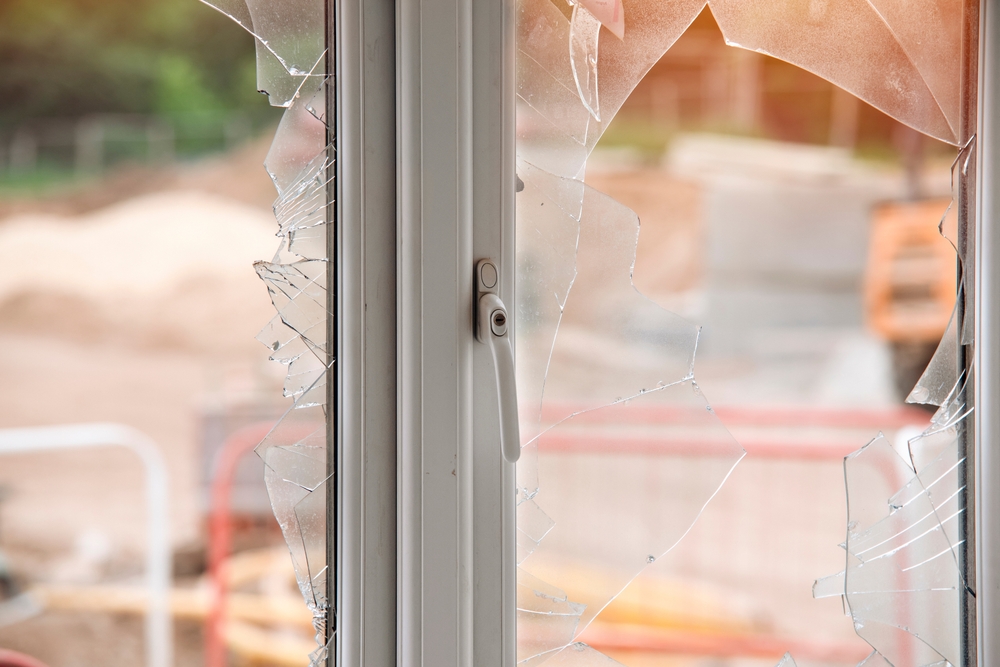
A professional evaluation is appropriate when glass is broken, insulated glass has failed, a window will not operate safely, or you cannot determine whether the problem involves only the glass or the complete assembly. Homeowners can perform visual checks, but window disassembly and glass handling should be left to qualified service professionals.
You can safely look for cracks, fogging, obvious seal deterioration, frame damage, and differences between problem windows and nearby windows.
Broken glass deserves particular care. Avoid handling loose shards or attempting a repair that could expose household members to sharp glass.
A professional can then determine which components are actually affected before you commit to repair or replacement.
What Commonly Causes Window Problems in Pahrump?
Common window problems in Pahrump can be associated with prolonged sun exposure, temperature stress, wind and dust, impact damage, aging seals, and normal wear of window components. The cause matters because an isolated glass problem may support repair, while broader deterioration can favor replacement.
1. Aging insulated glass seals: A failed seal can allow moisture or haze to appear between panes.
2. Strong solar exposure: Windows receiving direct afternoon sun can experience substantial heat exposure.
3. Wind and dust: Desert conditions can challenge weather seals and collect around tracks and moving components.
4. Impact damage: Flying debris, accidents, landscaping work, and other impacts can crack or break glass.
5. General component wear: Frames, locks, tracks, seals, and operating hardware can deteriorate over time.
How Can Homeowners Maintain Windows in the Desert?
Pahrump homeowners can maintain windows by periodically checking glass, seals, frames, tracks, and operation while keeping moving areas reasonably clean of desert dust. Routine checks are especially useful before peak summer heat and after periods of strong wind.
Clean accessible tracks according to the window manufacturer’s recommendations and inspect weather seals for visible gaps or deterioration. Compare windows throughout the home rather than evaluating one in isolation.
Pay particular attention to rooms with strong western or southern exposure. If a window suddenly becomes difficult to operate, develops glass damage, or shows moisture trapped between panes, stop at inspection and arrange professional evaluation rather than taking the assembly apart yourself.
What Results Can You Expect From Glass Repair or Window Replacement?
Glass repair should correct a glass-specific problem, while full window replacement can address broader issues involving the frame, glazing, seals, operation, and overall window performance. Neither option should be expected to solve unrelated insulation, HVAC, shading, or building-envelope problems.
If the existing window assembly is sound, replacing damaged or failed glass can restore its intended function without unnecessary replacement.
If several components have deteriorated, installing a new energy-efficient window provides an opportunity to address the assembly as a whole. Actual comfort and energy results vary by window specifications, installation, orientation, shading, home construction, and household use.
What Mistakes Should Pahrump Homeowners Avoid?
The biggest mistake is choosing repair or replacement based only on the upfront price instead of identifying which parts of the window have actually failed. A cheaper repair can be sensible for isolated damage, but it offers poor value when major problems remain elsewhere in the assembly.
Mistake: Replacing an entire window because the glass is cracked. Consequence: You may pay for components that did not need replacement. Better approach: Have the complete assembly evaluated first.
Mistake: Repairing glass while ignoring a deteriorated frame. Consequence: The original comfort or operational problem may remain. Better approach: Consider the condition of the frame, seals, and hardware.
Mistake: Assuming new windows guarantee a specific utility-bill reduction. Consequence: Expectations may not match actual household results. Better approach: Treat windows as one component of overall home energy performance.
What Is a Common Local Window Scenario?
A common local scenario is a Pahrump homeowner noticing fogging, heat, or damage at one window and wondering whether the entire unit must be replaced. The most useful first step is separating a glass-only failure from problems involving the frame and complete window assembly.
Suppose an insulated glass unit has lost its seal, but the window still operates correctly and its surrounding components remain serviceable. Glass replacement may deserve consideration.
Now suppose the same opening has deteriorated seals, poor operation, frame problems, and recurring issues. Full replacement becomes a more logical option to price alongside repair.
This is an illustrative scenario, not a specific customer case study.
Which Window Services Address These Problems?
Glass repair addresses damage or failure limited to replaceable glass, while window replacement addresses the complete window assembly when broader performance or condition problems exist. An inspection helps determine which service matches the actual condition instead of automatically choosing the larger project.
We can evaluate the visible window problem and discuss whether glass service or replacement is the more appropriate path based on the window’s condition.
How Do Glass Repair and Energy-Efficient Window Replacement Compare?
Glass repair usually offers the lower-scope solution when the surrounding window remains serviceable, while energy-efficient replacement is the broader investment when homeowners need to address multiple components or overall window performance. The final cost comparison depends on dimensions, glass specifications, window type, condition, accessibility, and installation requirements.
Factor
Glass Repair
Full Window Replacement
Project scope
Glass-focused
Complete window assembly
Best suited for
Isolated glass problems
Multiple or assembly-wide problems
Frame replacement
No
Yes
Addresses operating issues
Usually no
Can, depending on the cause
Upfront scope
Typically smaller
Typically larger
Energy-efficiency opportunity
Depends on existing assembly and glass
Allows selection of a new complete window
Installation requirements
Vary by glass and opening
Broader installation work
Because no project-specific pricing was supplied for this guide, homeowners should obtain an estimate based on the actual opening rather than relying on unsupported generic price ranges.
What Areas Around Pahrump Can Use This Decision Guide?
This repair-versus-replacement framework is useful for homeowners throughout Pahrump and the surrounding Pahrump Valley because the same desert exposure and window-condition questions apply across the local area. Properties toward Mountain Falls, areas near Nevada State Route 160, and homes elsewhere in Nye County can still differ significantly in age, construction, shade, and exposure.
The condition of the individual window should ultimately drive the recommendation.
What Can Happen If You Ignore a Failing Window?
Ignoring a failing window can allow an existing problem to become more disruptive, particularly when glass is unsafe, seals have failed, the window cannot close properly, or deterioration is spreading. Waiting can also make it harder to maintain indoor comfort during Southern Nevada’s hotter periods.
Not every cosmetic issue requires immediate replacement. The priority should be identifying safety concerns and determining whether the failure is stable or progressing.
Is glass repair cheaper than window replacement in Pahrump?
Glass repair generally involves a smaller project scope than replacing the entire window, but the actual price depends on the glass, dimensions, window design, accessibility, and required labor. A local estimate is the most reliable way to compare costs because a low repair price is not useful if other parts of the window also need replacement.
Should I replace a foggy double-pane window in Pahrump?
Fogging between panes usually indicates a problem within the insulated glass system, but it does not automatically mean the entire window assembly must be replaced. If the frame and other components remain serviceable, glass-focused service may be possible. A professional inspection can determine the appropriate scope for the specific window.
Are energy-efficient windows worth considering in Pahrump’s climate?
Energy-efficient windows are worth considering when existing windows have broader performance problems or homeowners are already planning full replacement. Pahrump’s hot, sunny desert conditions make solar exposure and heat transfer relevant considerations. Actual savings and comfort changes depend on window specifications, installation, orientation, shading, home construction, and HVAC use.
Can desert dust damage windows in Nye County?
Desert dust can collect in tracks, around seals, and on operating components, potentially contributing to difficult operation or exposing existing gaps. Nye County homeowners can periodically inspect accessible window components and clean them appropriately. Dust alone does not mean a window needs replacement, so persistent problems should be evaluated according to their actual cause.
Does a cracked window need immediate replacement in Pahrump?
Cracked glass should be addressed promptly because damaged glass can create a safety concern, but the entire window may not require replacement. Avoid handling unstable glass yourself. If the surrounding assembly remains in good condition, professional glass replacement may be an option after the window has been evaluated.
Should I replace all my home’s windows at once?
You do not necessarily need to replace every window at once if only certain units have problems. Pahrump homeowners can prioritize windows based on damage, failed seals, poor operation, deterioration, and comfort concerns. A room-by-room assessment can help separate isolated repair needs from windows that warrant complete replacement.
Do west-facing windows need special consideration in Pahrump?
West-facing windows deserve particular attention because they can receive strong afternoon solar exposure during hot desert weather. Homeowners may notice greater heat or glare in these rooms, but replacement is not automatically required. Window specifications, exterior shading, interior coverings, air leakage, and the surrounding building envelope can all affect comfort.
How do I choose between glass repair and replacement?
Choose glass repair when the problem is isolated to serviceable glass and the rest of the assembly remains in suitable condition; compare full replacement when the frame, seals, operation, or overall performance also need attention. An on-site evaluation provides the information needed to compare the scope and cost accurately.
Make Your Pahrump Home More Comfortable With the Right Window Solution
Choosing between glass repair and energy-efficient window replacement starts with knowing what has actually failed. We help local homeowners evaluate their options without assuming that every damaged or inefficient window requires the same solution.
Pahrump summers put windows to the test. With intense sunshine, long stretches of hot weather, and limited natural shade around many properties in the valley, solar heat entering through glass can make rooms noticeably less comfortable and increase the workload on cooling systems.
Solar screens are designed to reduce the amount of solar heat reaching window glass while still allowing light and outward visibility. For Pahrump property owners, they can be a practical way to improve comfort in rooms that receive strong sun without replacing otherwise functional windows.
Quick answer: Solar screens help reduce heat gain by intercepting sunlight before much of that solar energy reaches the window glass. They can be especially useful on west- and south-facing windows exposed to strong Nevada sun. Results vary based on window orientation, existing glass, screen material, shade, and the amount of direct sunlight the opening receives.
What local property owners should know
Solar screens work outside the glass, helping reduce solar exposure before it enters the building.
West-facing windows can be particularly challenging during hot Pahrump afternoons because they receive direct sun later in the day.
Homes with little exterior shade may have more to gain from solar-control improvements than heavily shaded properties.
Solar screens can reduce glare as well as heat, which may improve comfort in living rooms, offices, and other frequently used spaces.
The right solution depends on the individual window, its orientation, and the property’s comfort goals.
Why Do Solar Screens Matter in Pahrump?
Solar screens matter in Pahrump because strong desert sunlight can create significant heat gain through exposed windows, particularly during the warmer months. Reducing that solar exposure can make sun-facing rooms more comfortable and may reduce some of the cooling demand created by heat entering through the glass.
Pahrump sits in the Mojave Desert, where abundant sunshine, dry conditions, and limited shade are familiar parts of daily life. Properties throughout the Pahrump Valley, including those near Nevada State Route 160 and toward the Spring Mountains, can have windows exposed to direct sun for hours.
The problem can become especially noticeable in rooms with larger glass areas. A window that provides great natural light during cooler months may become a major source of unwanted heat as summer conditions intensify.
Pahrump Valley Glass works with local glass and window needs in this environment. When we evaluate solar screen options, the goal is to consider the actual opening and exposure rather than assume every window needs the same solution.
What Do Local Conditions Tell Us About Window Heat?
Local conditions show that solar exposure should be considered window by window because orientation, shade, glass area, and surrounding structures can substantially change how much heat a room experiences. A west-facing opening with little shade may behave very differently from a similar window protected by a porch or neighboring structure.
For homeowners in the Pahrump Valley, useful observations include when a room becomes uncomfortable, where glare occurs, and which windows receive direct sunlight during the hottest part of the day.
Those are field observations rather than measurements of a particular home’s energy performance. Actual heat reduction depends on the screen product, installation, window construction, and conditions at the property.
How Can Solar Heat Affect a Pahrump Home?
Solar heat can affect a Pahrump home by creating hot rooms, uncomfortable areas near windows, glare, and uneven temperatures from one side of the house to another. These effects can be especially noticeable when direct afternoon sunlight strikes large areas of exposed glass.
A room facing west may feel comfortable earlier in the day and considerably warmer later in the afternoon. That temperature difference can encourage occupants to lower the thermostat even when other rooms already feel cool.
Strong sunlight can also create glare on televisions and computer screens. For home offices and living spaces, controlling sunlight may therefore improve usability as well as temperature comfort.
What Are the Signs That Solar Screens May Help?
Solar screens may be worth considering when discomfort or glare consistently corresponds with direct sunlight entering particular windows. The clearest clues usually appear during sunny afternoons rather than during cloudy periods or after sunset.
Watch for these signs:
Rooms become noticeably hotter when direct sunlight reaches the windows.
West-facing rooms are uncomfortable during late afternoons.
Strong glare makes televisions or computer screens difficult to view.
Areas immediately beside windows feel much warmer than the rest of the room.
Blinds or curtains remain closed for much of the summer to control sunlight.
The cooling system is running while sun-exposed rooms still feel warmer.
Large windows receive hours of direct desert sun with little exterior shade.
These signs do not automatically mean the windows themselves are defective. They may simply indicate that solar exposure is contributing to the comfort problem.
When Should You Call a Professional About Solar Screens?
A professional evaluation makes sense when you want to determine which windows are good candidates for solar screens, need accurate sizing, or are deciding between solar screens and other glass or window solutions. An evaluation can also help distinguish solar heat gain from problems involving damaged glass or window components.
Homeowners can safely start by observing their property. Note which windows receive morning and afternoon sun, which rooms become hottest, and whether exterior features already provide shade.
Professional help becomes more useful when it is time to select materials, confirm measurements, evaluate existing windows, or install screens properly. If glass is cracked, damaged, or showing other problems, that issue should be evaluated separately rather than treated as a solar-screen problem.
What Commonly Causes Excessive Window Heat in the Pahrump Valley?
Excessive window heat in the Pahrump Valley commonly results from direct desert sun, window orientation, large areas of exposed glass, and limited exterior shade. Several of these conditions often occur together, making certain rooms much more affected than others.
1. West-facing exposure: Afternoon sun can strike windows directly when outdoor conditions are already hot.
2. South-facing exposure: Depending on season and surrounding shade, these windows can receive substantial sunlight.
3. Limited landscaping or structural shade: Open desert lots may leave windows exposed for extended periods.
4. Large glass areas: More exposed glass creates a larger surface through which solar energy can affect the interior.
5. Existing window characteristics: Different glass and window assemblies manage solar energy differently, so the existing window should be considered before choosing an improvement.
How Can Homeowners Manage Solar Heat?
Homeowners can manage solar heat by identifying their highest-exposure windows first and combining appropriate exterior solar control with sensible interior shading and routine window maintenance. In Pahrump, prioritizing the openings that receive sustained afternoon sun can be more practical than treating every window identically.
Walk around the property at different times on a sunny day. Notice where direct sun hits the glass and where roof overhangs, patios, trees, or neighboring structures provide shade.
Keep screens and windows reasonably clean so you can spot damage or deterioration. Check screen frames periodically for looseness or visible wear, particularly after windy or dusty conditions common around the valley.
Interior blinds and curtains can help with glare and privacy, but solar screens work from the exterior side of the window. Homeowners deciding between different approaches should consider comfort, daylight, visibility, appearance, and the condition of the existing window.
What Results Can You Expect From Solar Screens?
Solar screens can reasonably be expected to reduce solar exposure through treated windows and improve comfort in rooms affected by direct sunlight. They may also reduce glare, although the amount of improvement varies with the screen material, window orientation, existing glass, and surrounding shade.
They should not be treated as a guaranteed solution to every cooling problem. Poor insulation, air leakage, HVAC issues, or other building conditions can also cause uncomfortable rooms.
A properly selected solar-control solution addresses one specific part of the problem: sunlight reaching the window.
What Mistakes Should Pahrump Homeowners Avoid?
Pahrump homeowners should avoid assuming that every hot room needs the same solar-screen solution. Identifying the source and direction of the heat first makes it easier to focus improvements where they are likely to be most useful.
Mistake: Treating every window equally. Consequence: Money may be spent on openings that receive relatively little direct sun. Better approach: Prioritize the windows with the strongest exposure.
Mistake: Ignoring orientation. Consequence: The windows causing late-day discomfort may not receive enough attention. Better approach: Observe the home during morning and afternoon hours.
Mistake: Assuming screens solve every temperature problem. Consequence: Other causes of poor comfort can go unaddressed. Better approach: Consider windows alongside insulation, shading, and cooling-system performance.
Mistake: Choosing solely by appearance. Consequence: The selected option may not match the desired balance of shade, visibility, and daylight. Better approach: Discuss performance and comfort goals before choosing a screen.
What Is a Common Solar-Heat Scenario in Pahrump?
A common local scenario is a home where one or two west-facing rooms become uncomfortable late in the day while the rest of the house remains relatively comfortable. Direct sunlight reaches the glass for several hours, creating glare and noticeable warmth near the windows.
In a situation like this, the first step is identifying whether solar exposure closely tracks the discomfort. If it does, exterior solar screens may be one option worth evaluating for those specific openings.
This is a common scenario, not a description of a particular customer or project.
Which Services Can Address Solar Heat Through Windows?
Services that address solar heat should focus on the specific window, its existing condition, and the property’s goals for comfort, light, and visibility. Solar screens may be suitable when the primary concern is direct sunlight, while damaged or problematic glass may require a different window or glass service.
We can help property owners evaluate their windows and explore appropriate options based on the openings involved.
Solar screens differ from interior shades because they intercept sunlight on the exterior side of the glass, while curtains and blinds primarily manage light after it has reached the window area. Window or glass upgrades can address additional performance concerns but involve a different scope of work.
Interior coverings remain useful for privacy and adjustable light control. Exterior shading from awnings, porches, or landscaping can also be effective where the property allows it.
For a Pahrump homeowner primarily concerned with intense sunlight through otherwise serviceable windows, solar screens can offer a focused solution without automatically moving to full window replacement.
Where Are Solar Screen Services Relevant Locally?
Solar screen solutions can be relevant throughout Pahrump and surrounding parts of the Pahrump Valley where homes and businesses have windows exposed to strong desert sunlight. Properties toward Charleston Peak and the Spring Mountains may have different shading conditions than more open areas of Nye County.
The best approach is based on the individual property rather than the ZIP code alone.
What Can Happen If Excessive Solar Heat Is Ignored?
Ignoring excessive solar heat can leave rooms uncomfortable, increase glare, and cause occupants to compensate by adjusting the thermostat or keeping interior coverings closed. In the desert climate around Pahrump, those compromises can continue through a substantial portion of the warmer season.
The appropriate response does not need to be complicated. Start by identifying the windows most closely associated with the problem, then determine whether exterior solar control is a practical improvement.
Yes, solar screens can reduce solar heat reaching the glass on windows where they are installed. They are particularly relevant for Pahrump homes with strong direct sun exposure. The actual improvement depends on factors such as screen material, window orientation, existing glass, shading, and the size of the exposed opening.
Which windows benefit most from solar screens in Pahrump?
Windows receiving substantial direct sunlight are generally the strongest candidates for solar screens. In Pahrump, west-facing windows deserve particular attention because afternoon sunlight can coincide with high outdoor temperatures. South-facing openings may also benefit depending on seasonal sun angles, roof overhangs, landscaping, and other sources of shade.
Can solar screens help with Nevada desert glare?
Yes, solar screens can help reduce glare caused by intense sunlight entering through windows. This can make living rooms, bedrooms, and home offices more comfortable during bright Nevada days. The amount of glare reduction varies by screen material, so visibility and desired light levels should be considered when selecting an option.
Should every window on a Pahrump home get a solar screen?
No, every window does not necessarily need a solar screen. Pahrump homeowners can first identify which openings receive the strongest direct sunlight and which rooms experience the most discomfort. Windows already shaded by patios, overhangs, landscaping, or nearby structures may have different needs from fully exposed windows.
Are solar screens useful for businesses in the Pahrump Valley?
Yes, solar screens may be useful for Pahrump Valley businesses where direct sunlight creates heat or glare through exposed windows. Offices, waiting areas, and other occupied spaces can be affected by intense desert sun. Suitability depends on the building, window configuration, desired visibility, appearance, and existing glass.
Do solar screens replace damaged windows?
No, solar screens are not a substitute for repairing damaged glass or addressing problems with the window itself. If a window is cracked or has another visible defect, that condition should be evaluated separately. Solar screens primarily address solar exposure rather than structural or mechanical window problems.
Can solar screens lower cooling costs in Nye County?
Solar screens can reduce one source of cooling demand by limiting solar heat through treated windows, but specific energy-cost savings should not be assumed without evaluating the property. Cooling costs in Nye County can also be affected by insulation, HVAC efficiency, thermostat settings, air leakage, building design, and electricity usage patterns.
When is a good time to consider solar screens in Pahrump?
Solar screens can be considered whenever direct sunlight is causing recurring heat or glare problems, ideally before those problems become most noticeable during hotter weather. Observing rooms during sunny afternoons can help Pahrump property owners identify priority windows and decide where professional measurements or recommendations would be useful.
Improve Comfort Where Desert Sun Hits Hardest
Solar screens offer Pahrump property owners a targeted way to address heat and glare from exposed windows without assuming every opening requires the same treatment. We can help evaluate your windows and discuss solar screen options suited to your property and its sun exposure.